Flight into shadow
At the Venice Architecture Biennale, Flight into Shadow turns sunlight into an architectural material: filtered through living mycelium, shaped by an artificial sun, and choreographed into a space where light and relief move together. Conceived by Deggendorf Institute of Technology with HFT Stuttgart and the University of Stuttgart, the installation asks a quiet but urgent question - what if shade wasn’t an afterthought, but the plan itself?
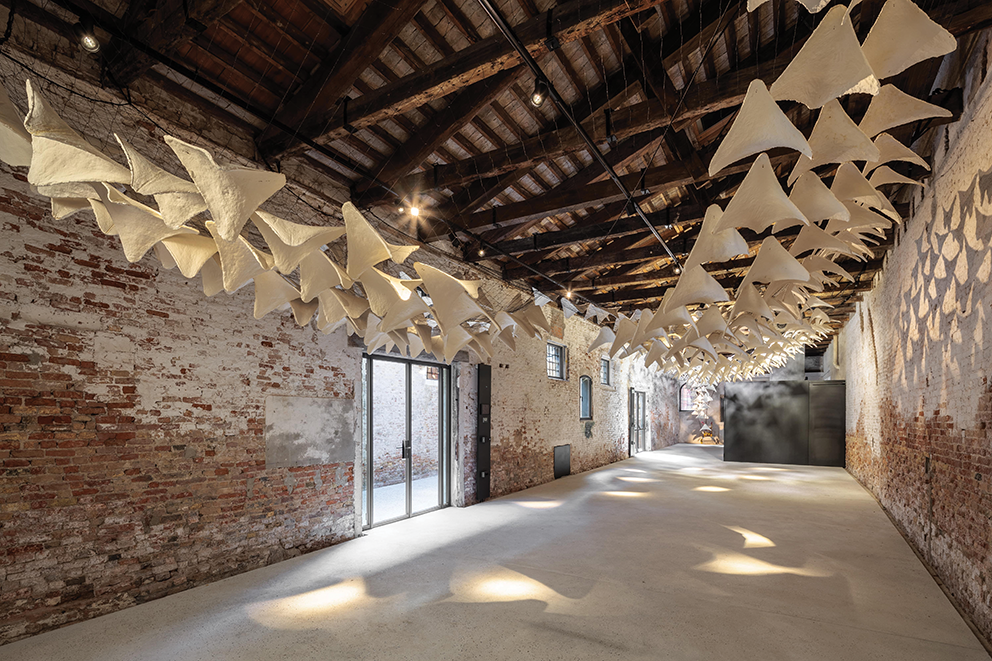
Presented at the Venice Architecture Biennale 2025, Flight into Shadow challenges the way we experience light in a warming world. Conceived by Deggendorf Institute of Technology in collaboration with HFT Stuttgart and the University of Stuttgart, the installation transforms sunlight from a passive condition into an active architectural force.
By inviting the sun indoors and filtering it through living mycelium structures, the project reimagines shadow not as absence, but as relief, protection, and spatial intelligence. In doing so, it offers a poetic yet urgent reflection on how cities might adapt to rising temperatures through material innovation and perceptual design.
Flight into Shadow explores how light and shadow can shape our perception of heat, relief, and comfort in heat-stressed urban environments. At its core is a bold architectural gesture: inviting the sun indoors to create a controlled solar experience, independent of external weather conditions.
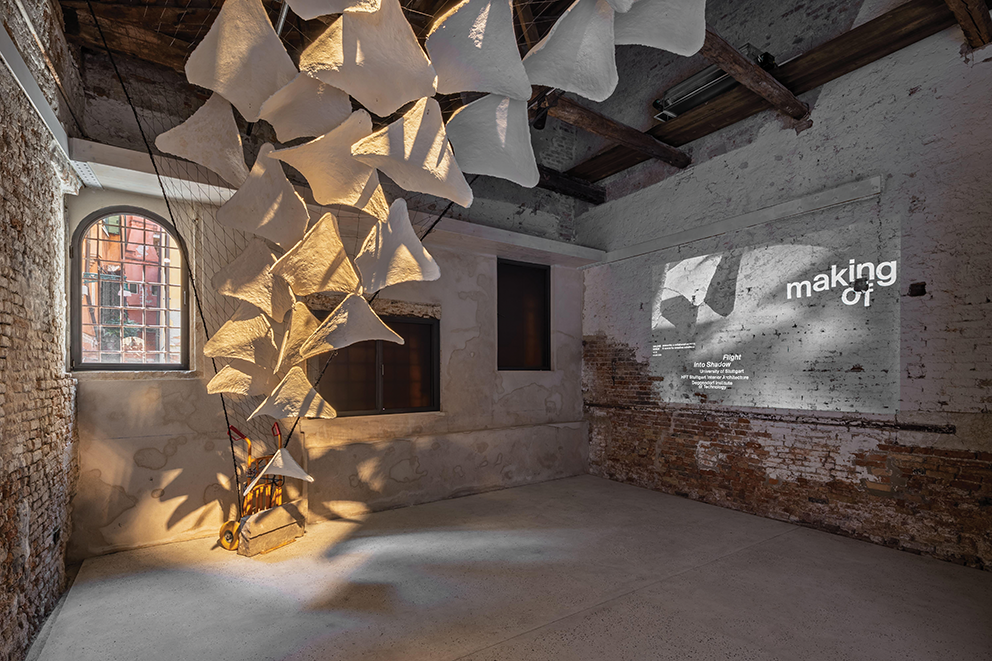
Living mycelium structures act as organic filters, forming delicate canopies that soften and scatter light. These structures embody ecological intelligence, allowing shadow to emerge as an active, spatial element, rather than a by-product. Light becomes both subject and medium, revealing the fragile balance between exposure, protection, and perception.
Inspired by the Komorebi effect, the fleeting play of sunlight filtering through leaves—the installation translates this natural phenomenon into an immersive architectural experience. What is usually momentary becomes spatial and tangible, capturing nature’s quiet choreography through form, material, and light.

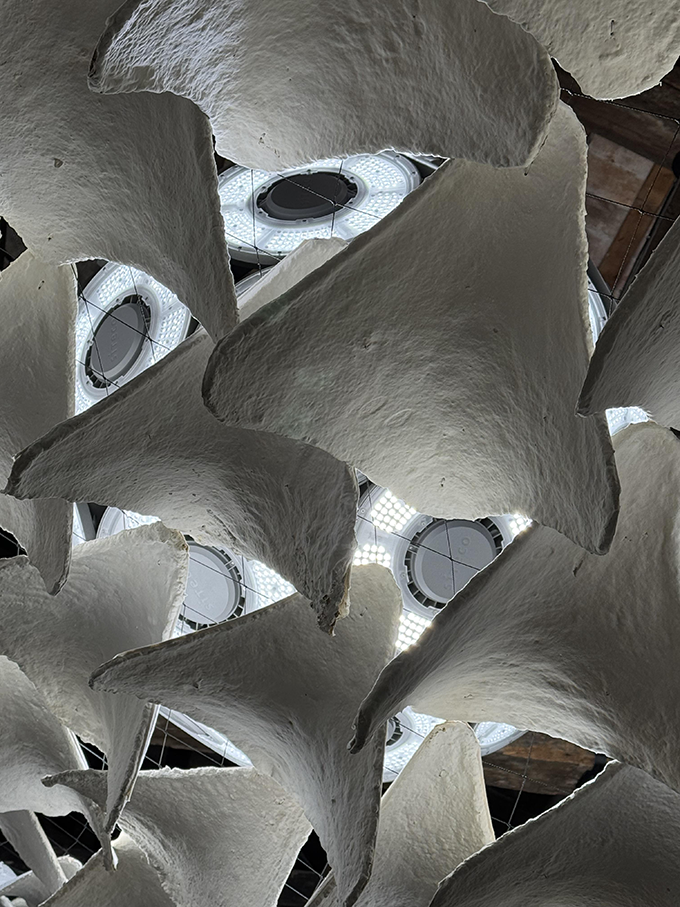
At the center of the space, a powerful artificial sun composed of individually controlled luminaires generates constantly shifting atmospheres. Visitors move between moments of intense brightness and zones of gentle refuge, experiencing light as a dynamic and living presence. Through a carefully composed choreography, the installation continuously transforms, unfolding a sequence of moods and scenes over time.
Presented during the Venice Architecture Biennale 2025 as part of the Keep Cool! Workshop for Cool Cities, Flight into Shadow is a collaborative project between HFT Stuttgart Interior Architecture, University of Stuttgart (IBK2), and Deggendorf Institute of Technology. The installation invites visitors to reflect on strategies of adaptation and coexistence in a climate-changing world, proposing shadow, material intelligence, and perception as key tools for shaping more resilient environments.