The Second Act
VAMP meets Joe Watts to talk about his Hollywood journey, overcoming adversity, and the powerful connection between movement, emotion, and art.
For years, Joe Watts lived life at a pace most people could only imagine. As a professional stunt performer, he stepped into the world of Hollywood action, becoming the person behind some of cinema’s most unforgettable moments. From explosive action sequences to physically demanding performances, Joe’s career was built on precision, courage, and an extraordinary understanding of movement. His credits include some of the biggest productions in modern cinema — Mission: Impossible, Solo: A Star Wars Story, Kingsman: The Golden Circle, and Game of Thrones. What emerged from that chapter was something nobody saw coming: a painter.
In 2019, a 25ft fall to concrete ended Joe Watts’ career as one of Hollywood’s most in-demand stunt performers. Star Wars, Mission: Impossible, Game of Thrones forty-three credits in three and a half extraordinary years.
What nobody expected was what came next. Not retirement. Not bitterness. A painter. A methodology. And a second life more remarkable than the first.
Q: What first attracted you to the world of stunts?
I started gymnastics when I was two years old, so being able to rotate has always been in my blood. I was South East of England Champion and 9th in the UK aged 16, but I retired from competitive gymnastics and took a different route, going to university to study Youth Work. During that time I did a lot of parkour and freerunning with mates, which I now realise was subconsciously preparing my body for falling from height and taking harder impacts.
Eventually, some friends and I were training at gymnastics with stunt performers so often that they encouraged us to commit to the British Stunt Register training programme. The three of us started the process to qualify as professional stunt performers together. I trained for 3.5 years in judo, gymnastics, trampolining, scuba diving, high diving, and rock climbing. I also needed first aid qualifications and proven good personal health. I qualified in December 2015 and it opened so many doors. I finally felt like I’d always been destined to be a stuntman.
I met my wife, third-generation award-winning stuntwoman Tilly Powell, in the process and we had a couple of years performing alongside each other around the world before my accident. Tilly still performs. My father-in-law, uncle-in-law, and most of my friends are involved too and I’m so proud of all of them. At first it was tough to be around people still doing what I could no longer do — but raw emotions like envy and loss only ostracised me. I used painting as my reason to escape that reality instead.
Q: What was it like being part of the unseen team that brings movie action sequences to life?
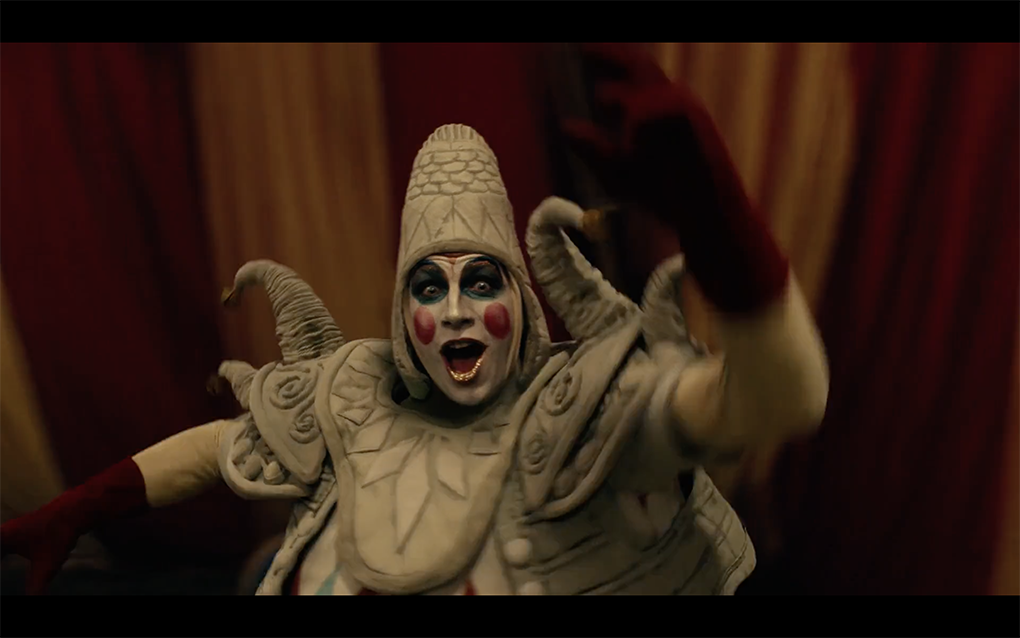
I loved it. It is a very creative role which is often overlooked. A stunt team takes the written word of a script and produces it in visual form for the entertainment of the audience. One of the best things was being at work with top actors, then being able to walk down the shops and have no member of the public know otherwise. I could stand out on screen and hide in plain sight the rest of the time.
Stunts regularly pushed me to the extremes of what I thought was possible. With careful planning and consideration I was able to see that things are only impossible until someone works out how to do them — and the film industry is full of people curious enough to try.
It seems strange to write it, but I genuinely miss being blown up, precision driving at high speed, flying through the air attached to a wire, being in fights that usually result in my death on screen, falling down stairs and dropping from height into cardboard boxes and safety mats.
I may sound like a thrill-seeker and adrenaline junkie, but honestly I’m not. When I qualified as a professional stuntman, I was scared of anything that wasn’t gymnastics. I said no to jobs outside my comfort zone and promptly didn’t work much. To change that, I trained in boxing and fighting with weapons, practised my reactions, asked established stunt people for tips, and pushed myself constantly. The fear lessened with repetition and a shift in mindset. Then the phone started ringing.
By my third year I was on core teams, and jobs were waiting for me to finish the last production before I could start on theirs.
Q: Are there moments from your stunt career that stand out as particularly meaningful?
So many. In only 3.5 years I accumulated 43 credits across films, TV, commercials, and music videos.
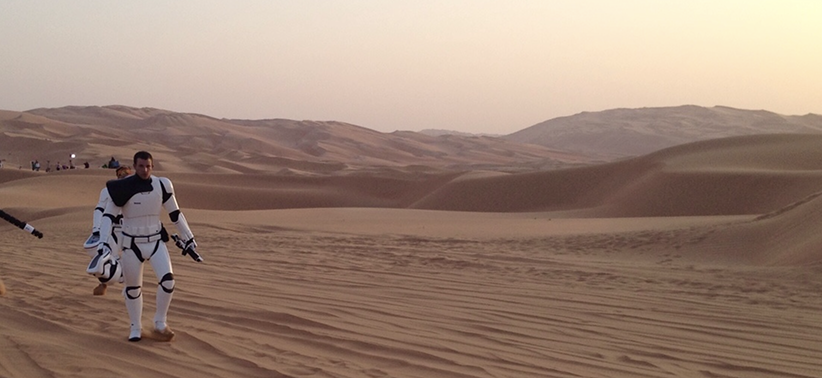
Getting great feedback from Steven Spielberg whilst performing reactions for him alone on a small set at 2,000 frames per second on Ready Player One was extraordinary. Being a stormtrooper in three Star Wars films — including in the desert near Abu Dhabi where the hottest day hit 56 degrees Celsius in full stormtrooper armour — was surreal and brilliant in equal measure. Stunt doubling Mark Strong in Kingsman: The Golden Circle. Standing in for Shane Ritchie falling down the stairs as Alfie Moon in the EastEnders Christmas special. Performing in a music video where Robbie Williams boxed himself.
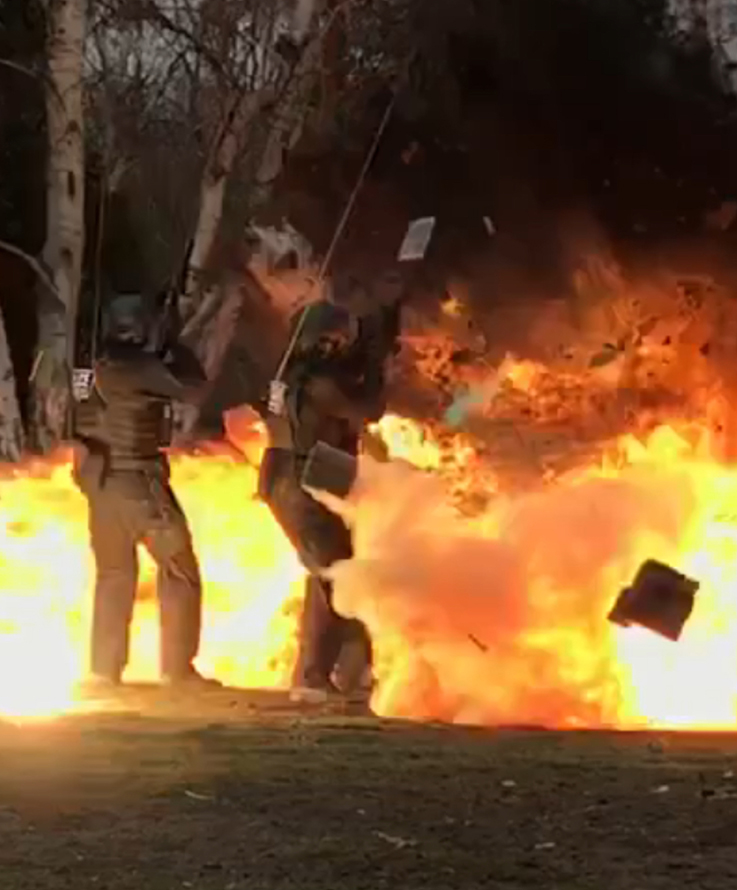
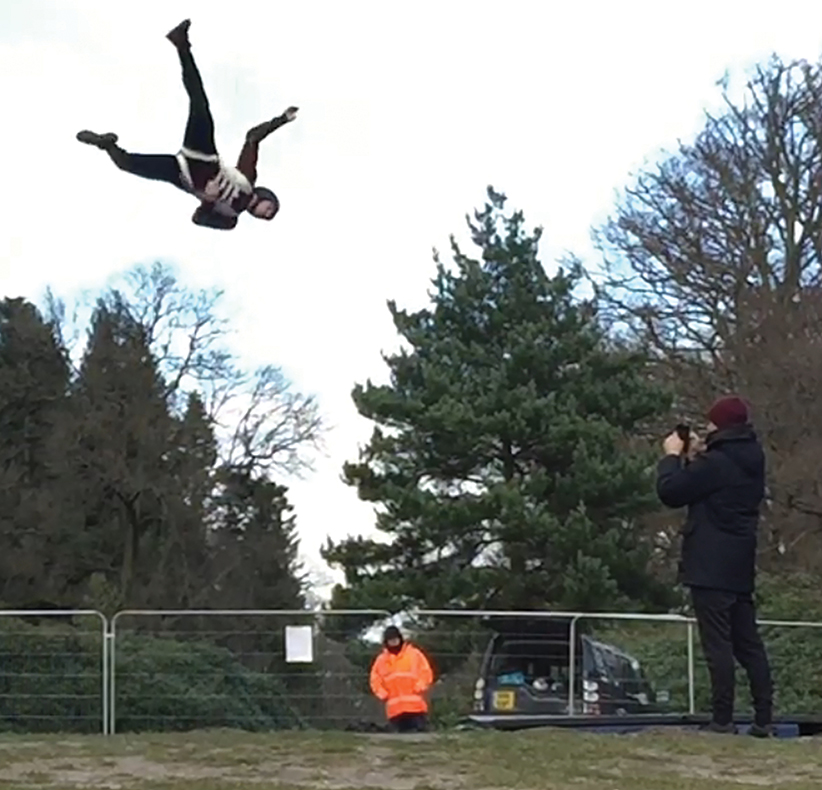
I also got to work alongside Dame Helen Mirren, Gerard Butler, Channing Tatum, Salma Hayek, Mackenzie Foy, and my childhood idol Jackie Chan. My Hollywood credits include Star Wars, Jurassic World, Mission: Impossible, Transformers, Game of Thrones, Disney’s The Nutcracker and the Four Realms, Mamma Mia 2, Pokémon: Detective Pikachu, and Ready Player One.
It was a brilliant, brief and unparalleled career.
Q: How would you describe the journey of rebuilding yourself after your accident?
Brutal, treacherous, and never-ending. The darkness went on so long that even now it sometimes feels confusing that I’m out the other side.
A brain injury is complicated. I didn’t know what it meant before I got one. Your brain is building everything you understand of the world. It controls your abilities, memories, movements, passions, and emotions. It creates your understanding of time — the past, present, and future. When you get a brain injury, your brain doesn’t necessarily know it. Whilst everybody else sees that you’ve changed, you only see that others have changed in their approach to you.
By some people I felt condemned as if I had created the trauma they were feeling. Others did their best to put on a smile. I still felt ready to take on life like before, and it took me at least the first year to actually contemplate what I had to recover from. It was, and still is at times, very isolating.
My brain was telling me that the words I believed I was speaking were coming out — but when I look at videos from that time I see myself repeating words or getting distracted a couple of words in. Before, I felt that was a problem. Now I think it’s an amazing opportunity to think uniquely in your own way.
I’ve been through heavy depression, struggled with my mental health, faced More fear than I thought could be possible, and completely redesigned myself from the inside out. But I’ve reached beyond my dreams and it’s pretty cool being here.
Q: When you could no longer continue as a stunt performer, how did you rediscover who Joe Watts was?
If your life were a blank slate —no balance, no speech, minimal abilities, memories, or understanding of life—what would you do? Would you see a clear path out or give up? Would you feel overwhelmed?
To redefine yourself and your identity is one of the hardest, yet most satisfying, efforts you will ever put into your self-development. The results will be with you for life. The process starts with what passions charge your battery. Commit time to them even if you’re scared or anxious. The first time is always the worst — so go into it excited for the next time being easier.
Find your passions, then find people who communicate in a style you benefit from. We learn best from the people we have the best rapport with.
One of my rehabilitation therapists suggested I get an art studio to help me escape and express myself. I had been colouring in adult colouring books in hospital. I also completed an Art Foundation Diploma when I was 19. Relighting that flame in an art studio was easily one of the best decisions I’ve made. It gave me a purpose.
I used painting as my reason to escape reality , a reason to step out of the bubble of hardship into a world with no judgment, only personal expression. It was so freeing. And having a way to still express myself was vital to my recovery.
Q: How did painting become your new form of storytelling?
I’ve always enjoyed art — excelling at it at school and college. Post-accident, since gymnastics was no longer possible, art was a natural alternative to try. I lost so many memories in my fall but I did remember learning to stencil at art college.
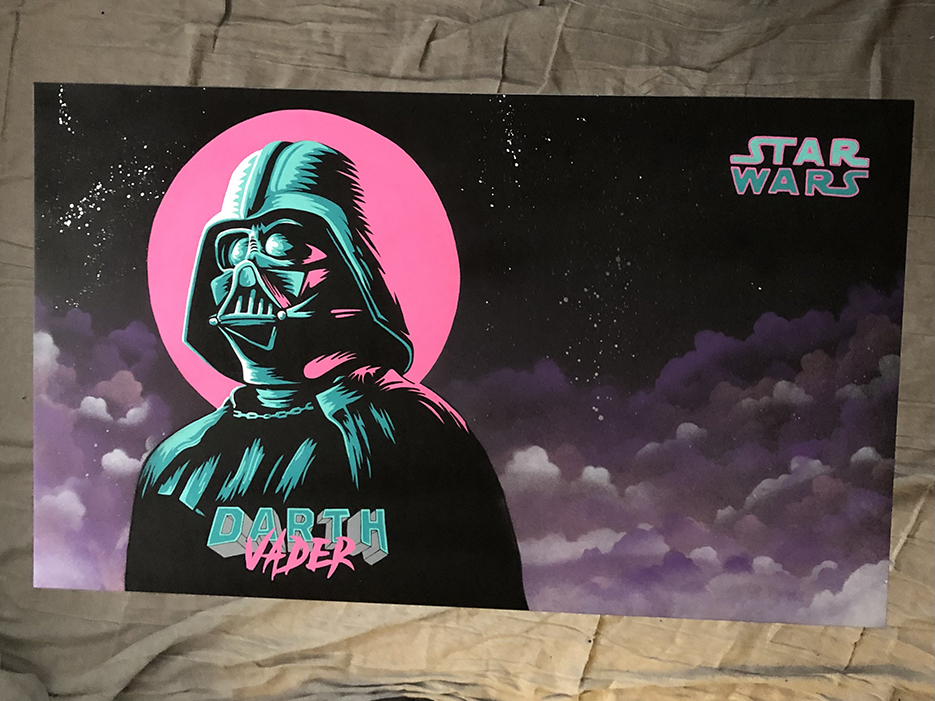
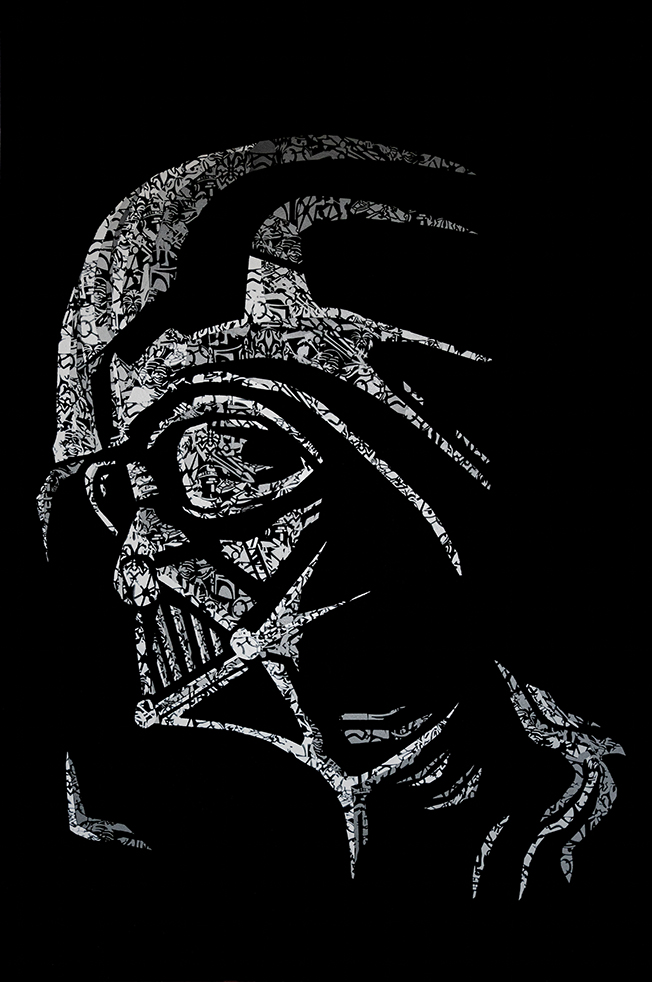
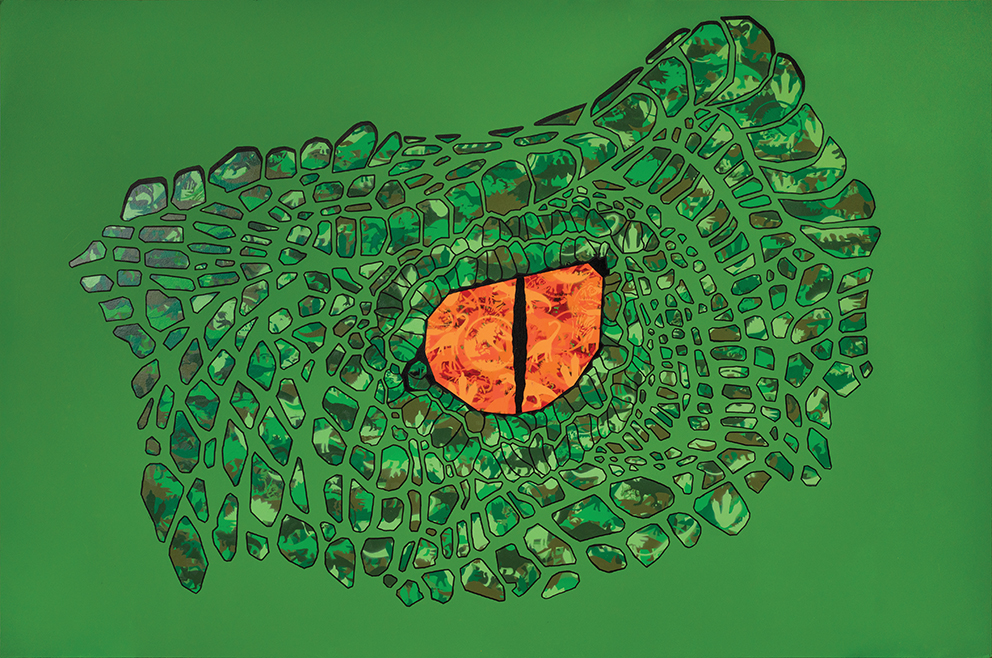
Initially I created stencils and spray painted them all over the walls of my studio in acts of rebellion at the situation I was in. I ran out of wall space quickly. I then spray painted large film murals — Darth Vader from Star Wars on one wall and Pikachu and Raichu from Pokémon on the other. I had issues with dexterity and hand control and couldn’t make the stencils small enough, so the canvas had to become bigger. Hence the 6ft x 4ft wooden boards I now paint on.
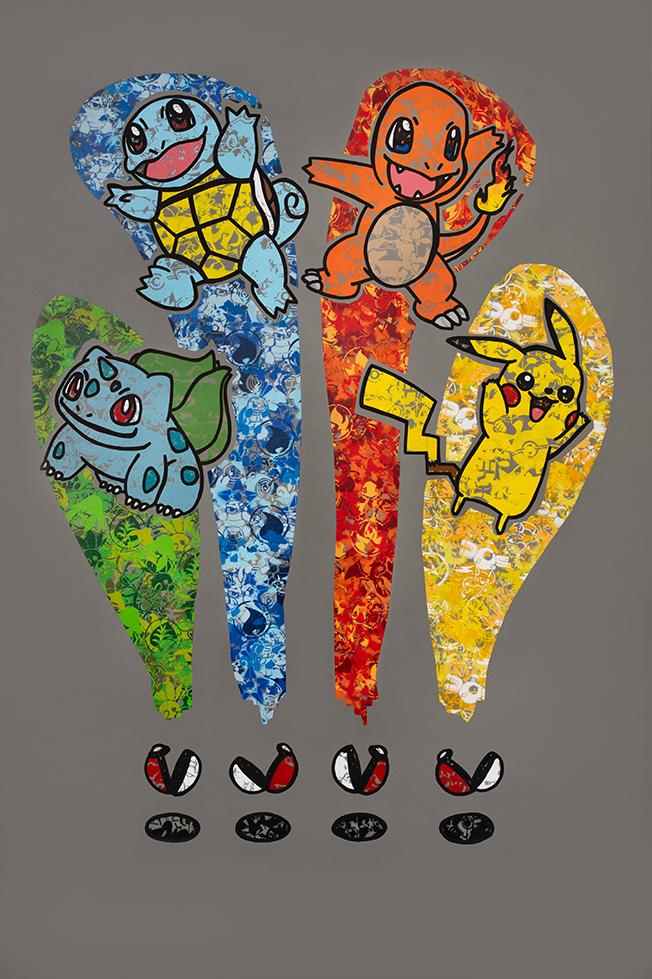
I am in the process of creating four large paintings based on films I performed on, using spray paint and hand-cut stencils. The titles of each piece are quotes taken from the film or franchise they’re from. So far I have completed Star Wars, Jurassic, and Pokémon. Game of Thrones is next.
The Pokémon piece alone contains 65 different hand-cut stencils and took four years to complete. Each painting is a unique design and I look forward to completing my portfolio before I launch as an artist selling prints of my work worldwide.
Q: Do you see similarities between performing a stunt and creating a piece of art?
Both are creative expression, so yes, there are a lot of similarities. In stunts I learned about adapting, being resilient, designing a sequence then practising to see if it would work, and aiming for the good reactions of stunt coordinators and directors when you perform well. In my paintings I’ve had the opportunity to work on my patience and trust my instincts — but it hasn’t been easy.
A lot of negative emotion was invested into my first piece, Star Wars, and it’s reflected by the title: ‘You have controlled your fear, now release your anger.’ By my second piece, Jurassic, I had a lot more appreciation and gratitude for the journey I was on. My Jurassic piece is aptly named ‘You can’t see to the other side until you’re there’.
Each art piece is lots of small steps compounded together and takes a minimum of a year, a lot of patience, and following the process. My entire brain injury recovery has needed exactly that.
I can only paint when I have the energy because fatigue is a symptom of my brain injury. If I head to my studio for two hours and only achieve one small step, I’m happy — because before I went there was no contribution. The end result will appreciate it. Just keep contributing to the journey. You’ll know when you’ve arrived at the destination.
Q: You developed something called The Mountain Method during your recovery. Can you explain it?
When creating my paintings I steadily climb a hypothetical mountain of little steps all the way to the top. When I focus on how far there is to go I find it overwhelming. It’s been the same for every area of my recovery. I call the framework The Mountain Method and it works in three steps.
Step one is Dreams. Think of a mountain and place your dream at the top. The longer you stay at the bottom — in the valley, the comfort zone — the more overwhelming and impossible climbing feels. Self-doubt seeps in. So place your dream at the top and forget about it. You’re simply aiming in that direction.
Step two is Goals. Consider your route up the mountain and mark it with key goals — signposts on the way up. Focus on the first one. The route isn’t straight; sometimes you may take a path that doesn’t lead anywhere good and you’ll need to adapt. There is often an alternative route.
Step three, and the most important, is Steps. Focus on the one step directly in front of you. If it’s too hard, break it down into smaller, easier tasks — little baby steps that slowly edge you closer to the summit. And as you climb, make sure you look back and acknowledge the view. See how far you’ve come, because you did that. No one else. That realisation releases good chemicals in your brain and gives gratitude for the moments you thought you would never make it through.
The point of the mountain isn’t simply to climb it. Most people climb mountains to check out the view. I’ve had feedback from others struggling with recovery from health issues that The Mountain Method has been transformational in shifting their mindset. Try it out.
Q: What do you hope people feel when they experience your artwork?
When you come out of a cinema after watching a great film you think, that was good. The more times you watch it, the more you notice all the little details — other characters, deeper storylines. I hope people feel the same way about my paintings. I like viewers to acknowledge the big picture then write their own stories with their eyes as they explore the depth of the image. Every viewer will create a unique story. Each 6ft x 4ft piece is littered with details you won’t see initially. I like that.
I like creating a double-take — someone looks once and appreciates it, then looks again and recognises the work that went into creating it slowly over time.
Q: If you could speak to the Joe Watts who was starting his stunt career, what would you tell him?
When you feel scared of something, it doesn’t mean don’t do it — only that you’ve reached the limit of what you think you can do. Do it anyway. You’ve got this. The skills you learn by putting yourself through the hardship will forever be worth it in the long run. Even if you don’t see it now.
Love yourself — not in arrogance, just through self-confidence. In order to be the best version of you, you need to fill your own cup up. Be proud of your achievements. Soak in knowledge like a sponge through every person, situation, and conversation. Apply what feels right. Watch your life evolve. Don’t be afraid to fail — failure is the route to growth. You never know when you’re going to need the information.
Joe has created a new brand — JOE2X®️ — which celebrates his second attempt at life post-injury. For more info see www.linktr.ee/JOE2X